
Getting your systems to talk to each other (without the headaches).
The most common integration problem isn’t technical — it’s a decision problem. This article covers how to define data ownership before connecting anything, what a complete job record needs to include, and what processes should be in place when execution diverges from the plan mid-day.
8 min read
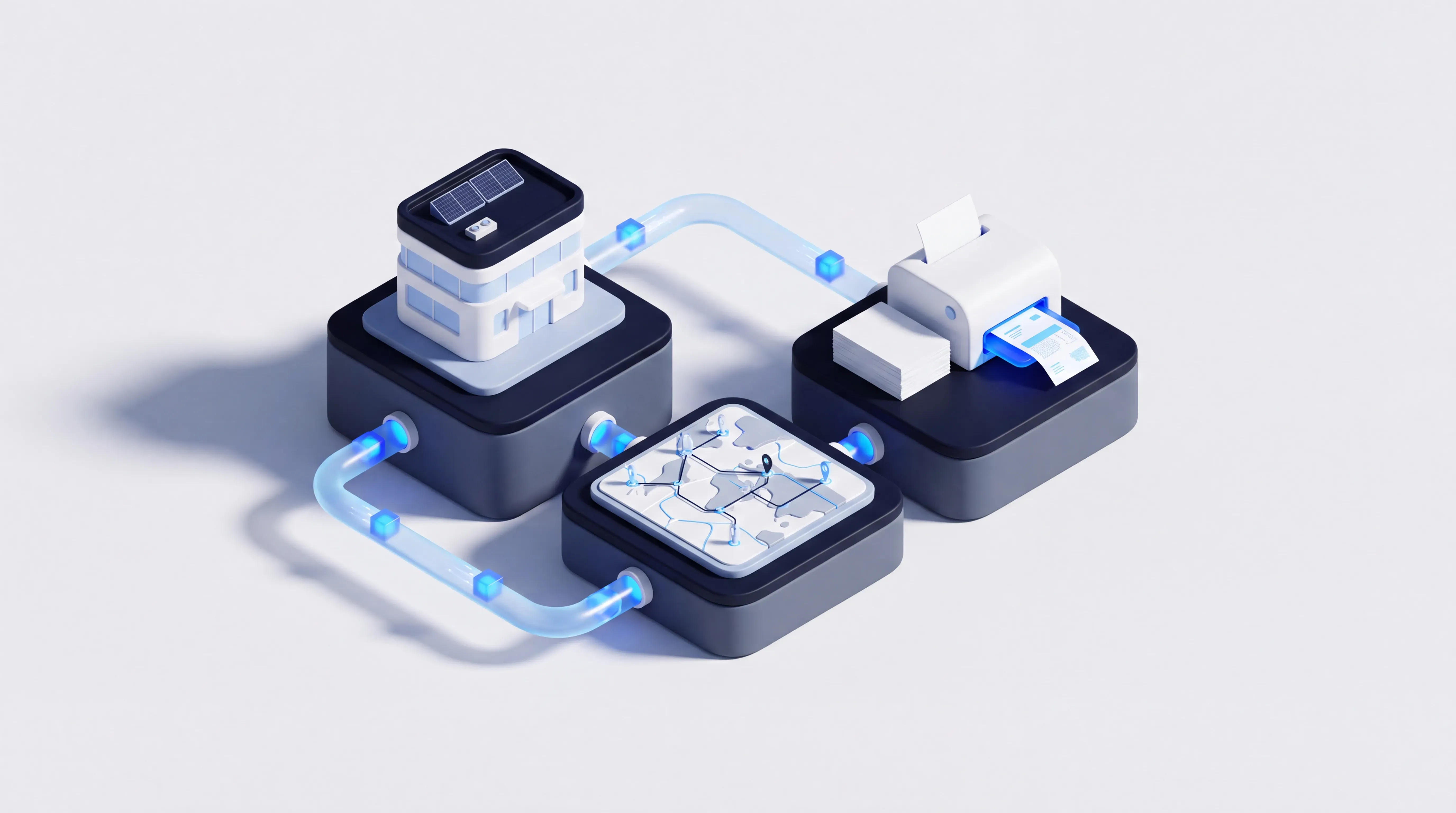
The most common integration problem isn't technical. It's a decision problem.
Two systems can be connected perfectly — syncing reliably, running without errors — and still create chaos. It happens when nobody agreed on which system owns which data, what a complete job record looks like, or what happens when something changes mid-day.
Integration done well isn't about connecting technology first. It's about agreeing on information before you connect anything.
Establish a source of truth for each type of data
Start with a simple question for each category of data in your operation: where does this get updated first?
Customer records: updated in your booking or CRM system, then synced to planning. Vehicle details: updated in fleet management, then referenced by planning. Job status: updated by the driver or execution system, then reflected back to billing and reporting.
When this isn't defined, the same record gets updated in multiple places — and the systems start disagreeing. An address change made in one system doesn't appear in another. A vehicle taken out of service is still appearing in plans. These aren't software bugs. They're the result of unclear data ownership.
Map it out before you integrate. For each data type: where is it created, where is it updated, and where does it need to flow?
Define what a complete task record looks like
This is where many integrations underperform. A job flows from one system to another, but without enough detail to be planned well.
A task that arrives in your planning system without a precise location, or with no time window, or with capacity requirements missing, creates a problem immediately — because planning tools can only work with what they're given.
Define the minimum required fields for a task to be considered plannable:
- Precise location — not just a suburb or general area
- Time expectations — open window, preferred window, or hard commitment
- All capacity dimensions relevant to your vehicles
- Any skill, equipment, or vehicle-type requirements
- A realistic duration estimate
If your upstream system doesn't capture these fields reliably, that gap needs addressing before the integration is built — not after.
Set defaults for the gaps
Even with well-defined requirements, new data gets created without all the details. A new customer is added quickly without a service window. A new vehicle is set up without capacity limits. A driver is created without defined working hours.
Without defaults, these incomplete records create unreliable plans — or worse, errors that go unnoticed until something breaks in the field.
Define sensible defaults for every field that matters. These aren't permanent settings — they're fallbacks that keep planning functioning while the details are filled in properly. A new customer might default to a standard business-hours window. A new vehicle might default to a standard capacity profile. Defaults are a design decision, not a workaround.
Plan for what happens after planning
Integration doesn't stop once routes are built. Routes feed into what comes next: driver briefings, proof of delivery, customer notifications, billing, and reporting. And during the day, reality will diverge from the plan.
A job gets canceled. A driver runs significantly late. A customer requests a reschedule. These events need to flow through the system — not just be handled manually and forgotten.
Define what happens when a job is canceled: does the route update automatically, or is it a manual fix? How does a status update from the driver feed back into billing? If the answer is 'we handle it manually,' that's a valid choice — but it should be a conscious one, not an accidental gap.
| Integration checklist: |
|---|
| Source of truth is defined for each key data type (customers, vehicles, jobs, status) |
| Task records include all fields required for reliable planning before they enter the system |
| Defaults are set for incomplete records — customers, vehicles, and drivers |
| Route outputs connect to downstream processes: driver apps, billing, reporting |
| Change handling is defined — what happens when reality diverges from the plan |
Integration done right doesn't just reduce data entry. It removes a whole category of errors that currently require human intervention to catch and fix — and it makes the information your planning depends on consistently more reliable.