
Why route planning is the backbone of efficient operations.
Route planning is upstream of most of what happens in a field-based operation. This article explains why planning quality sets the ceiling on fleet productivity, how it directly shapes customer experience, and why it determines whether your team manages the day or firefights it.
6 min read
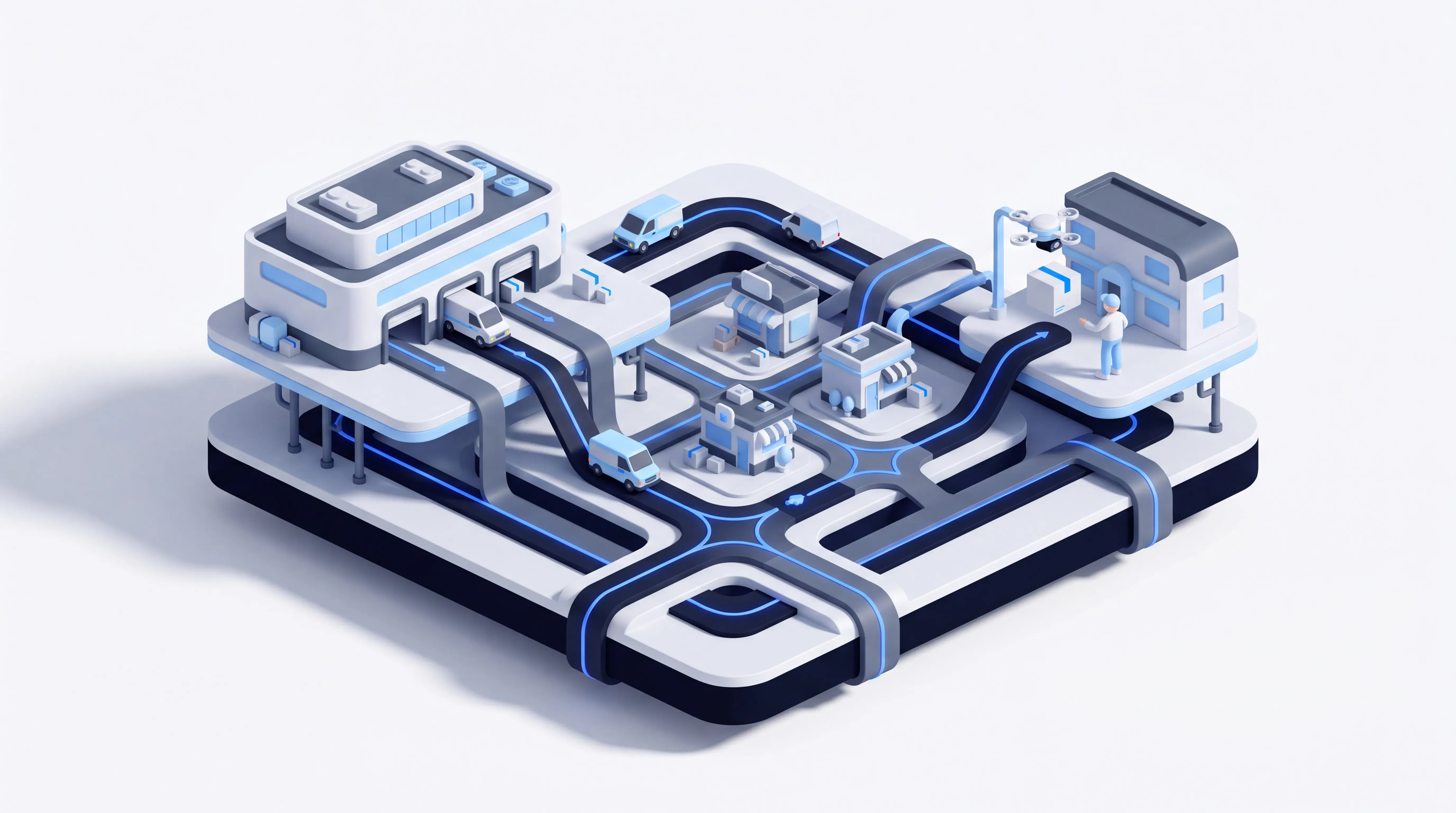
Most operational problems that show up late in the day started earlier — in the plan.
Vehicles in the wrong place. A driver behind schedule with no information on how to adapt. A customer waiting with no update. Overtime building on a route that was always too tight to be achievable.
Route planning is upstream of most of what happens in a field-based operation. When it works well, the effects cascade forward positively. When it doesn't, those effects cascade forward too.
It determines whether your fleet is productive or expensive
A vehicle on an efficient route completes more work in the same time at lower cost per job. A vehicle on a poorly designed route — backtracking, waiting, making unnecessary detours — costs money without proportional output.
This doesn't just affect fuel. It affects how many jobs can be completed with your current fleet, whether you need additional vehicles to handle volume growth, and what your cost per delivery looks like relative to what it could be.
The fleet you have is only as effective as the routes it runs on. Planning quality sets the ceiling on fleet productivity — and no amount of operational efficiency downstream compensates for routes that weren't well built.
It directly shapes the customer experience
Your customers don't see your planning process. They see whether the delivery arrived when expected, whether the technician turned up in the promised window, and whether they got a meaningful update when something changed.
All of those outcomes are downstream of planning decisions. Routes that build in realistic time buffers allow accurate time windows to be communicated. Plans that protect high-priority commitments ensure your most important customers don't absorb the variance from the rest of the day.
Service reliability isn't a separate function from route planning. It's a product of it.
It determines whether your team manages or firefights
When planning works, drivers know what their day looks like and can execute without constant contact. Planners improve future plans rather than rescuing today's. Dispatchers manage by exception rather than intervention.
When planning is weak, the opposite happens. Drivers call asking what to do next. Planners spend the day rerouting. Customer service handles complaints instead of managing expectations.
The management overhead required to compensate for poor planning is one of its least visible costs — but it's significant. It pulls experienced people away from improvement work and into daily firefighting, making it harder to break the cycle.
It sets the ceiling on what other improvements can achieve
When businesses invest in better processes, better tools, or more analytical capacity, they're building on the baseline set by their planning.
But that investment can only compound on a solid foundation. Optimization layered on poor planning produces marginal gains at best — and often, the complexity introduced by the optimization makes the underlying problems harder to see.
Strong planning creates the conditions for other improvements to take hold. Consistent data flows from planning to execution to reporting. Drivers build reliable habits because the plans they follow are reliable. Customers receive consistent service because the plan honors consistent commitments.
| What strong planning enables across the operation: |
|---|
| Fleet productivity — more jobs completed per vehicle at lower unit cost |
| Accurate customer commitments — time windows that can genuinely be kept |
| Manageable days for drivers — clear plans they can execute without constant guidance |
| Proactive management — planners addressing exceptions, not rebuilding from scratch |
| A reliable foundation — for data, for improvement work, and for growth |
Getting route planning right isn't a discrete project with a completion date. It's an ongoing discipline. But the cumulative effect of doing it well — building plans that are realistic, that protect the right priorities, and that your team can actually execute — is one of the most durable operational advantages a field-based business can build.